
Steel MTB Frames: Why Classic Materials Still Matter
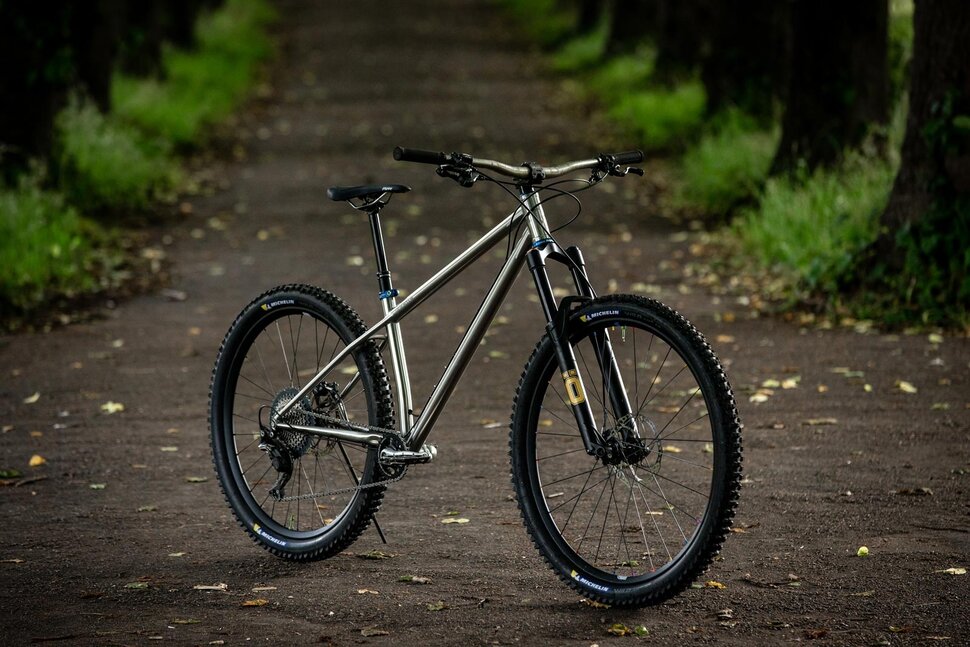
In an era dominated by carbon fiber marketing campaigns and aluminum's mass-market appeal, steel mountain bike frames might seem like technological relics from cycling's past. Yet a passionate and growing community of riders continues to choose steel for their mountain bikes, and their devotion isn't rooted in nostalgia or technological ignorance. Steel frames offer a distinctive combination of ride quality, durability, repairability, and character that modern materials struggle to replicate. Understanding steel's enduring relevance in contemporary mountain biking reveals why this classic material not only survives but thrives in the 21st century.
This comprehensive guide explores what makes steel mountain bike frames special, examining the material science, real-world performance characteristics, practical advantages, and circumstances where steel's unique properties make it the optimal choice for discriminating riders who value qualities beyond minimum weight and maximum stiffness.
Understanding Modern Steel Frame Materials
Beyond Your Grandfather's Bicycle
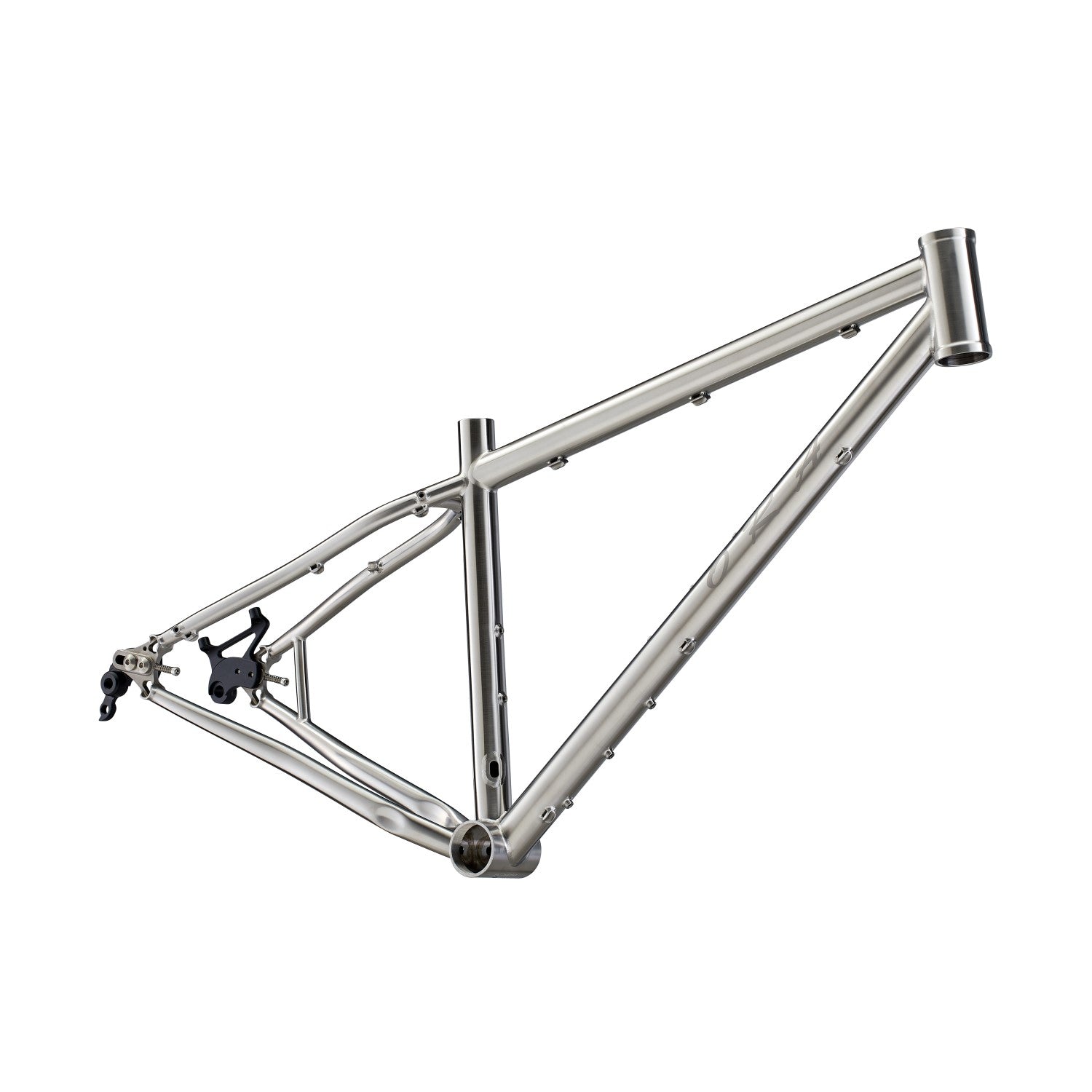
The steel mountain bike frames of today bear little resemblance to the heavy, rust-prone bikes of decades past. Modern steel frame construction utilizes advanced alloys—primarily chromoly (chromium-molybdenum steel)—that deliver strength-to-weight ratios approaching aluminum while maintaining steel's characteristic ride quality and durability advantages.
The most common steel alloys for quality frames include 4130 chromoly and higher-end options like Columbus Spirit, Reynolds 853, and True Temper OX Platinum. These advanced steels employ precise alloy formulations and specialized heat treatments that create tubes matching or exceeding aluminum's strength while maintaining steel's superior fatigue resistance and repairability.
Modern steel frames also benefit from advanced manufacturing techniques. Butted tubing—tubes with varying wall thickness, thicker at the ends where stress concentrates and thinner in the middle to reduce weight—allows frame builders to optimize strength-to-weight ratios. The most advanced steel tubing features triple-butting with three different wall thicknesses, placing material precisely where structural demands require it while minimizing weight elsewhere.
The Physics of Steel's Ride Quality
Steel's distinctive ride quality stems from fundamental material properties. The metal's modulus of elasticity (stiffness) is lower than aluminum or carbon fiber, meaning steel flexes more under load. This compliance doesn't indicate weakness—it reflects steel's ability to absorb and dissipate energy through elastic deformation rather than transmitting it directly to the rider.
When a steel frame encounters trail impacts, the material flexes slightly, absorbing high-frequency vibrations and smoothing out trail chatter. This micro-flex happens at scales imperceptible to the eye but readily felt by the rider. The result is what steel advocates describe as a "supple" or "lively" feel—the frame communicates terrain information without harsh feedback that causes fatigue.
Steel's damping characteristics also contribute to ride quality. The material's internal friction dissipates vibration energy as heat, further reducing the trail buzz that accumulates into rider fatigue over long rides. These damping properties are intrinsic to steel's crystal structure and cannot be replicated through frame design alone in stiffer materials.
The Legendary Steel Ride Quality
Compliance Without Compromise
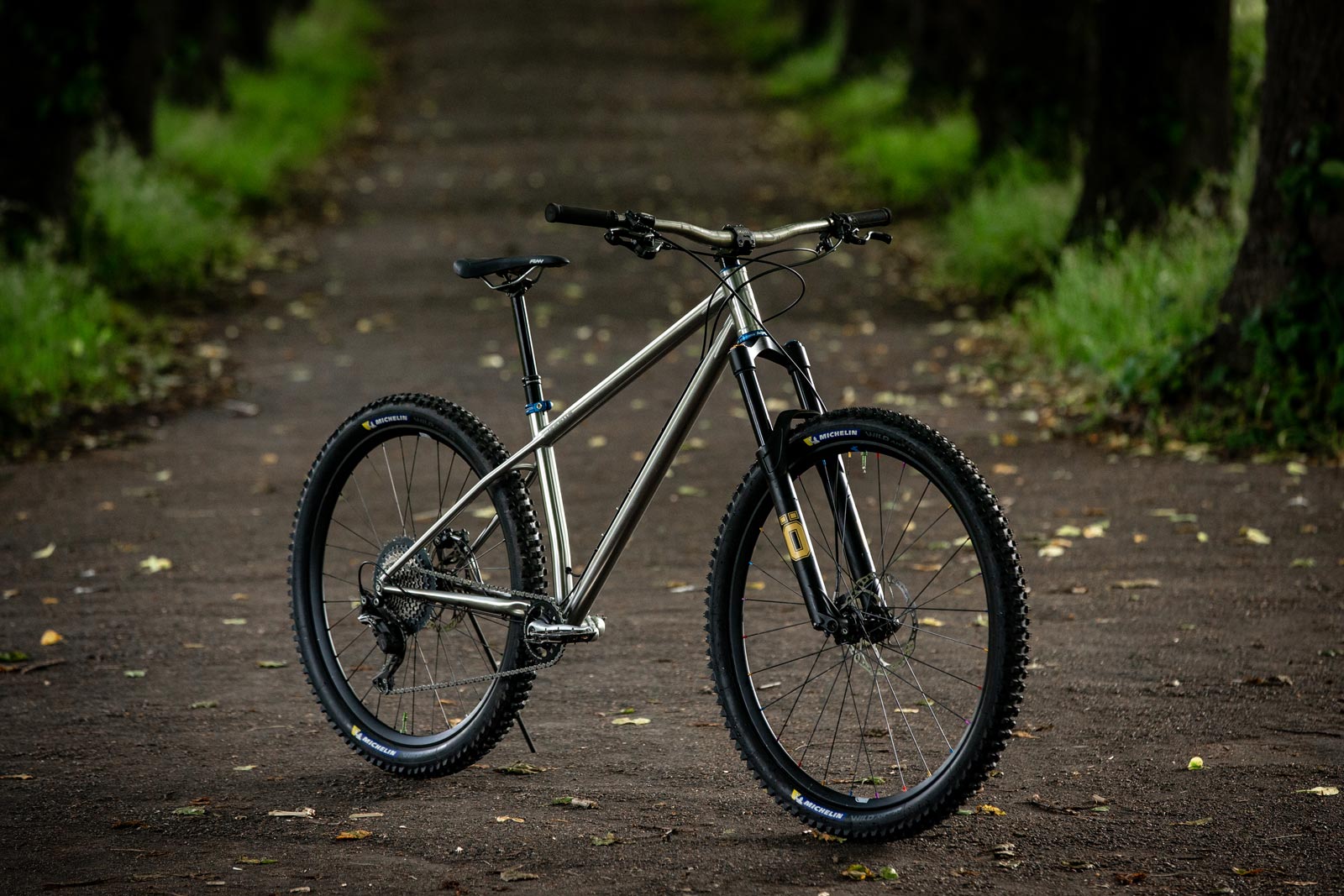
Steel frames deliver compliance—vertical flex that absorbs impacts—without sacrificing lateral stiffness necessary for efficient power transfer. This combination seems contradictory but stems from careful tube shaping and butting that creates stiffness where pedaling forces demand it while allowing compliance in directions that enhance comfort.
The ride quality difference becomes most apparent on extended rides over rough terrain. Steel frames smooth out washboard surfaces, root sections, and rock gardens that would beat riders into exhaustion on stiffer frames. The comfort advantage compounds over hours, allowing steel riders to maintain energy and focus when aluminum or aggressive carbon riders begin feeling beaten up.
This isn't just subjective preference—it's measurable physiology. Reduced high-frequency vibration transmission means less muscle micro-damage, less neural fatigue, and better sustained performance. For riders tackling all-day epics, multi-day bikepacking adventures, or simply logging high weekly mileage, steel's comfort advantages translate to tangible performance benefits.
The Connected Trail Feel
Steel provides what riders describe as "road feel" or "trail communication"—tactile feedback that connects you to terrain without harsh transmission of every impact. You feel what your tires are doing, sensing traction changes and surface variations that inform line choices and weight distribution adjustments.
This connected feel benefits technical riding tremendously. When navigating rock gardens, you sense when front tire traction maximizes, allowing precise weight shifts that maintain momentum. On descents, you read terrain through the bike, anticipating transitions and adjusting before visual confirmation becomes necessary. Less experienced riders develop technical skills faster when their bikes provide clear feedback about what's happening at the contact patches.
The communication isn't harsh or jarring—it's filtered information that enhances control without punishment. This balance defines steel's appeal for riders who prioritize feel and connection over pure efficiency metrics.
Durability and Practical Advantages
Fatigue Resistance and Longevity
Steel frames exhibit excellent fatigue resistance, withstanding millions of stress cycles without the cumulative damage that limits aluminum frame lifespan. While steel does experience fatigue unlike titanium (which has essentially infinite fatigue life below stress thresholds), quality steel frames easily last 20-30 years with proper care—far exceeding aluminum's typical service life.
The fatigue resistance matters particularly for aggressive riders who accumulate stress cycles rapidly through hard riding, big impacts, and demanding terrain. Steel tolerates this abuse year after year without concerns about accumulated damage weakening the structure. Many riders own steel frames that have outlived multiple component generations, seeing bottom bracket standard changes, drivetrain evolutions, and wheel size transitions while the frame soldiers on reliably.
Crash and Impact Tolerance
Steel's ductility—its ability to deform without fracturing—provides excellent crash resilience. In impacts that would crack carbon fiber or dent aluminum beyond repair, steel often survives with repairable damage or returns to shape. A steel frame might sustain a dent from a significant impact, but that dent rarely compromises structural integrity or ridability.
This impact tolerance particularly benefits riders who push limits, ride aggressive terrain, or simply want frames that tolerate occasional misadventures without catastrophic failure. Steel provides confidence that your frame will likely survive crashes that would write off frames in more brittle materials.
Repairability and Field Fixes
Steel frames offer exceptional repairability compared to modern alternatives. Any competent welder can repair steel frames, often restoring full structural integrity. Cracked tubes can be replaced, damaged dropouts can be cut off and new ones welded on, and bent frames can often be cold-set back into alignment.
This repairability extends steel frame lifespan and provides peace of mind for riders in remote areas. A carbon frame damaged in backcountry likely means trip termination and expensive replacement. A steel frame might be temporarily rideable even with damage, and permanent repair is often straightforward and economical.
For bikepacking and adventure riders far from bike shops, steel's field repairability offers security. In true emergencies, steel frames can even be temporarily repaired through improvisive methods that would be impossible with carbon or aluminum.
Rust Resistance in Modern Frames
Historic steel's biggest drawback—rust susceptibility—has been largely mitigated in modern frames through several approaches. Quality paint and powder coat finishes provide excellent corrosion protection. Stainless steel variants eliminate rust concerns entirely, though at weight and cost premiums. Even bare steel frames can be maintained rust-free through regular oiling of internal surfaces and touch-up of paint chips.
For riders in dry climates or those diligent about maintenance, rust concerns are minimal. Coastal riders or those in humid environments need more vigilance, but proper care prevents corrosion issues. Many steel advocates actually appreciate the maintenance ritual as connection to their equipment—caring for steel frames becomes part of the ownership experience rather than a burden.
Weight Realities and Context
The Weight Penalty in Perspective
Steel's primary disadvantage is weight. Modern steel frames typically weigh 1,600-2,200 grams for hardtails and 2,800-3,500 grams for full-suspension frames—roughly 20-40% heavier than equivalent carbon frames and 10-25% heavier than aluminum alternatives.
This weight penalty is real and measurable. Steel frames require more energy to climb and accelerate. The difference is most noticeable to competitive riders, weight-conscious climbers, and those coming from ultra-light carbon bikes.
However, context matters tremendously. The frame weight difference between steel and aluminum hardtails might be 400-600 grams (roughly one pound). On a complete 28-pound bike, that represents about 2% of system weight. For a 180-pound rider, the complete bike weight difference is barely 0.3% of total rider-plus-bike mass.
When Weight Matters Less Than Ride Quality
Many riders discover that steel's comfort advantages on rough terrain outweigh the pure weight penalty. A slightly heavier bike that allows them to ride harder, longer, and with less fatigue produces better overall performance than a lighter bike that beats them up.
This is particularly true for:
Technical Trail Riding: Constant speed modulation and technical sections where handling matters more than absolute weight make steel's superior feel more valuable than minimal weight.
Bikepacking and Adventure Riding: When carrying 20-40 pounds of gear, a pound of frame weight becomes insignificant, while steel's comfort on loaded bikes and repairability in remote areas provide substantial advantages.
Recreational Riding: Riders who don't race or chase Strava PRs often find weight concerns overblown. The riding experience quality matters more than stopwatch times.
Gravity and Downhill: Descending benefits from stability and planted feel. Steel's weight can actually enhance confidence at speed.
Economic Considerations and Value
Price Points and Accessibility
Steel frames occupy interesting economic territory. Basic steel frames start lower than aluminum equivalents—entry-level steel hardtails can be found for $300-$600, making them accessible to budget-conscious riders. Mid-range quality steel frames cost $800-$1,500, competitive with or slightly less than comparable aluminum.
However, premium steel frames utilizing advanced tubing and custom geometry can exceed $2,000-$3,000, approaching titanium pricing. These high-end steel frames offer exotic tubing, custom geometry, and artisan craftsmanship that justify premium costs for riders who value steel's characteristics.
The broad price range means steel frames serve both budget-conscious beginners and discerning enthusiasts willing to invest in premium materials and construction. This accessibility partly explains steel's enduring popularity—riders at all price points can access steel's ride quality advantages.
Lifetime Cost of Ownership
Steel's longevity and repairability affect lifetime economics significantly. A $1,200 steel frame lasting 25 years represents $48 annual cost. Three aluminum frames over the same period at $800 each total $2,400—double the steel investment. While simplified, this math illustrates how steel's durability translates to economic value for riders who keep bikes long-term.
The strong used market for quality steel frames also affects value equations. Well-maintained steel frames from respected builders maintain resale value well, often selling for 50-70% of original price after years of use. This retained value effectively reduces true ownership cost.
Environmental and Sustainability Considerations
The Eco-Friendly Choice
Steel frames offer compelling sustainability advantages. Steel is infinitely recyclable without quality degradation—old steel frames can be melted down and reformed into new high-quality steel products. The recycling process is well-established and economically viable, meaning steel frames rarely end up in landfills.
Carbon fiber recycling remains problematic and economically challenging. Most carbon frames eventually become landfill waste, though recycling technologies are developing. Aluminum recycles well but requires significant energy inputs and quality degradation through recycling cycles.
Steel's longevity also reduces environmental impact through extended service life. One steel frame serving 25 years has dramatically lower environmental footprint than multiple shorter-lived frames, regardless of recyclability.
For environmentally conscious riders, steel represents the most sustainable frame material choice, combining recyclability with longevity that minimizes resource consumption.
Supporting Artisan Frame Builders
Steel's relative ease of working compared to titanium and lower equipment costs than carbon manufacturing make it accessible to small-scale artisan frame builders. Choosing steel often means supporting independent craftspeople who build frames by hand with attention to detail that mass production cannot match.
This craftsmanship connection appeals to riders who value knowing who built their frame, supporting local businesses, and owning equipment with character and story beyond factory production lines. The personal connection to frame builders and the unique character of handbuilt frames add intangible value that matters to many steel advocates.
Ideal Steel Frame Candidates
Who Benefits Most from Steel?
Comfort-Focused Riders: Those who prioritize ride quality and all-day comfort over minimum weight find steel's compliance transformative.
Adventure and Bikepacking Riders: Repairability, durability, and loaded-bike handling make steel ideal for remote riding and multi-day adventures.
Technical Trail Enthusiasts: Riders who value feel and connection on demanding terrain benefit from steel's superior feedback.
Value-Conscious Long-Term Owners: Riders seeking maximum lifetime value through extended ownership appreciate steel's longevity.
Sustainable Living Advocates: Environmentally conscious riders value steel's recyclability and durability.
Craftmanship Appreciators: Those who value artisan construction and unique character choose steel for intangible qualities beyond performance metrics.
When Other Materials Make More Sense
Steel isn't optimal for every scenario:
Competitive Cross-Country Racers: Weight-sensitive racing where seconds matter justifies carbon's weight advantages despite higher costs.
Pure Climbers: Riders obsessed with climbing speed and minimum weight benefit from lighter materials.
Riders in Corrosive Environments: Coastal areas with salt spray make aluminum or titanium's corrosion resistance more practical unless diligent maintenance is acceptable.
Frequent Upgraders: Riders who change bikes every few years get better resale liquidity from aluminum or carbon.
The Steel Renaissance
Growing Appreciation for Classic Values
Steel is experiencing a renaissance among mountain bikers who've tried carbon and aluminum but found something missing. These riders return to steel not from technological ignorance but from refined understanding that pure performance metrics don't capture complete riding experience quality.
The growing gravel and bikepacking segments particularly embrace steel for its durability, comfort, and repairability on extended adventures. Instagram feeds fill with beautifully constructed steel frames on epic rides worldwide, demonstrating that steel remains relevant and aspirational in modern cycling.
Modern Geometry with Classic Materials
Contemporary steel frames combine classic material advantages with modern geometry, suspension design, and standards compatibility. Slack head angles, long reach, and progressive geometry pair perfectly with steel's ride quality, creating bikes that descend confidently while climbing efficiently despite slight weight penalties.
Conclusion
Steel mountain bike frames endure because they offer genuine advantages that matter to significant rider populations. The material's legendary ride quality, exceptional durability, straightforward repairability, and environmental sustainability create compelling value propositions that carbon and aluminum cannot fully replicate. While steel won't win weight weenie competitions or set climbing records, it excels at characteristics many riders ultimately value more highly—comfort, longevity, character, and connection.
For riders willing to accept modest weight penalties in exchange for superior ride quality and decades of reliable service, steel represents not a compromise but an optimal choice. The material's resurgence reflects growing recognition that newest doesn't always mean best, and that classic materials earn their longevity through genuine merit rather than nostalgic appeal alone.
Ready to explore frame options that prioritize ride quality, durability, and lifetime value? Discover our custom MTB frame collection featuring steel alongside carbon, titanium, and aluminum options. Whether you choose steel's classic character or modern materials offering different advantages, building your ideal mountain bike begins with selecting the frame material that aligns with your riding priorities, terrain, and values. Sometimes the best choice isn't the lightest or newest—it's the one that makes every ride feel exactly right.
Recent articles
View all
Smart Trainer vs Wheel-On Trainer: Which Indoor Bike Trainer Should You Buy?
Best Indoor Cycling Apps for Smart Trainers: Zwift, TrainerRoad, and More