
Hybrid E-Bikes vs Mountain E-Bikes vs Road E-Bikes: Which is Right for You?
Choosing your first electric bike can feel overwhelming. With so many categories, specifications, and price points available, how do you know which type of e-bike will best suit your riding style and needs? The three most popular categories—hybrid e-bikes, mountain e-bikes, and road e-bikes—each offer distinct advantages for different types of riders and terrain.
In this comprehensive guide, we'll break down the key differences between these three e-bike categories, helping you make an informed decision about which one deserves a spot in your garage. Whether you're commuting to work, exploring backcountry trails, or logging serious road miles, understanding these differences will ensure you invest in the right machine for your cycling adventures.
Understanding the Three Main E-Bike Categories
Before diving into detailed comparisons, let's establish what defines each category and who they're designed for.
Hybrid e-bikes are the versatile all-rounders of the e-bike world. They blend characteristics from both road and mountain bikes, featuring upright riding positions, medium-width tires, and components designed for mixed-use riding. Think of them as the SUV of bicycles—comfortable, practical, and capable of handling a variety of conditions without excelling at any one specialty.
Mountain e-bikes (eMTBs) are purpose-built for off-road adventure. With robust suspension systems, aggressive tire tread, powerful motors, and durable frames, these bikes are engineered to conquer trails, roots, rocks, and steep climbs that would be impossible on other bike types. They prioritize traction, control, and durability over speed and efficiency.
Road e-bikes focus on speed, efficiency, and performance on paved surfaces. With their lightweight frames, narrow tires, aerodynamic positioning, and road-specific components, these bikes are designed for riders who want to cover long distances quickly on pavement, whether for fitness, group rides, or fast commuting.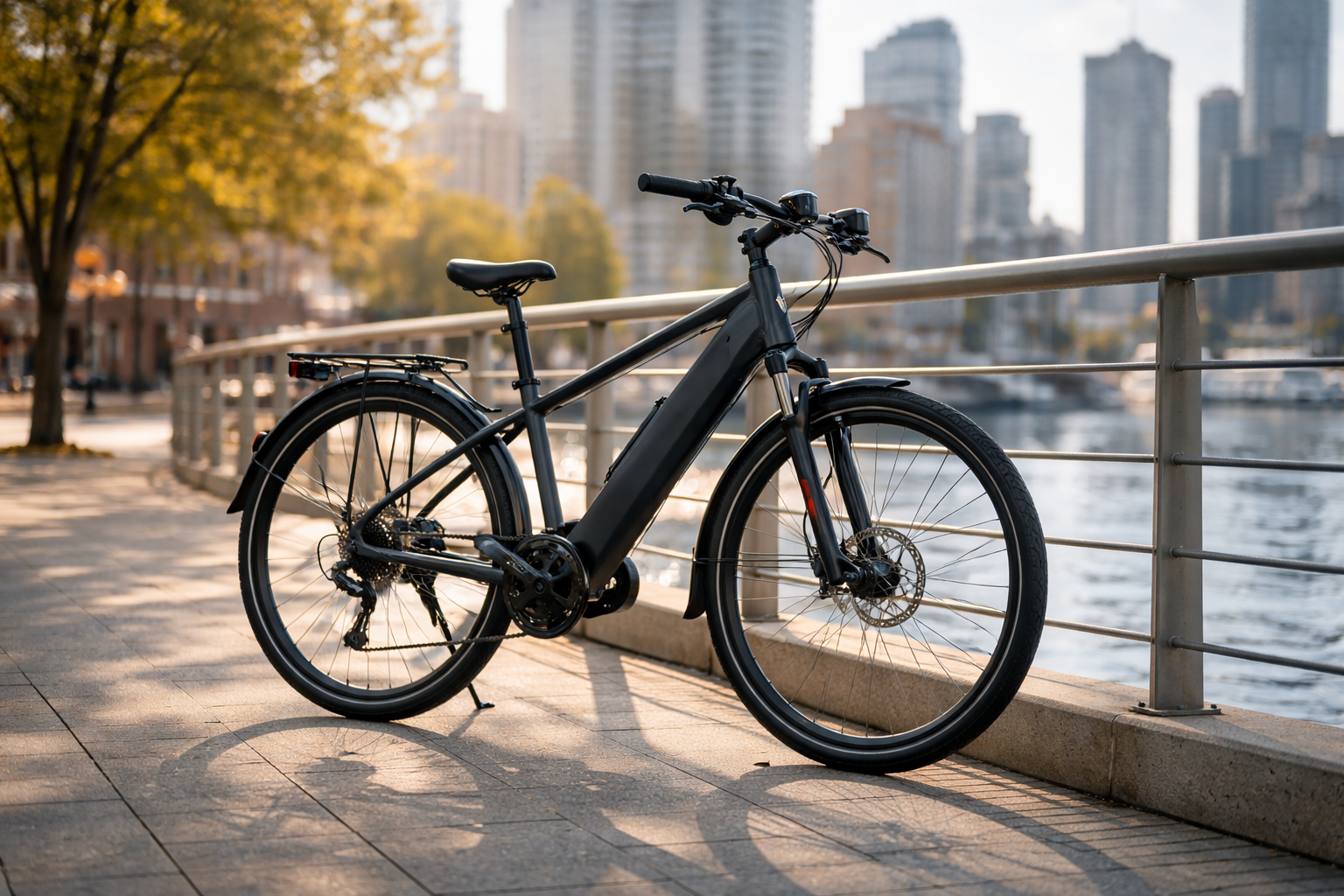
Detailed Comparison: Key Differences
Riding Position and Comfort
Your riding position dramatically affects comfort, visibility, and the type of riding you'll enjoy most.
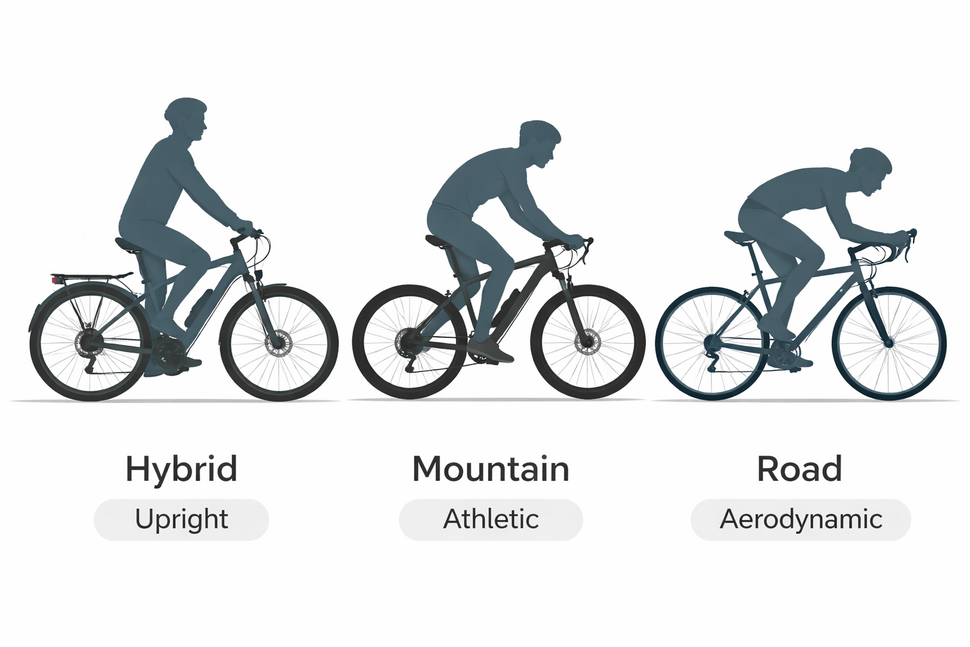
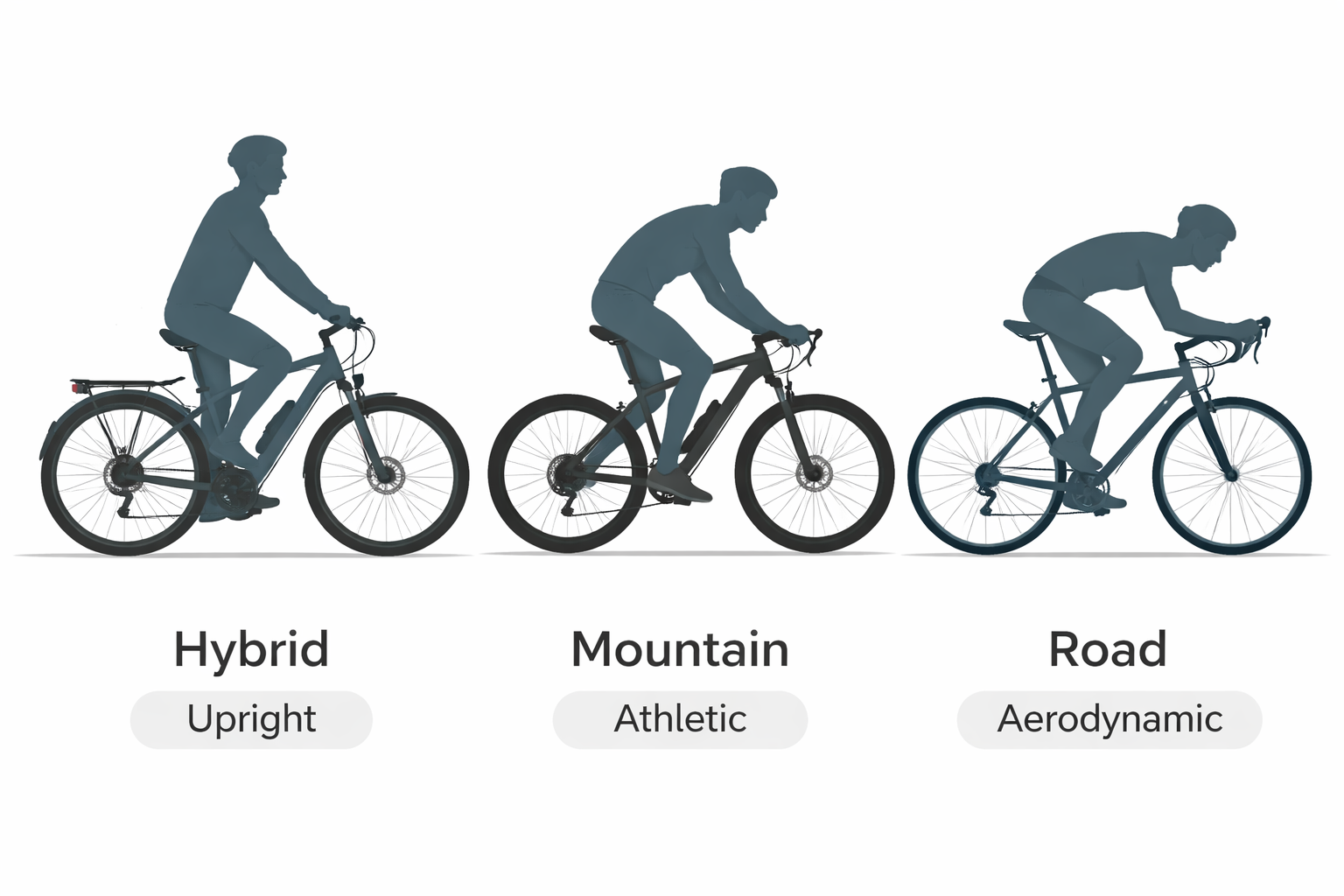
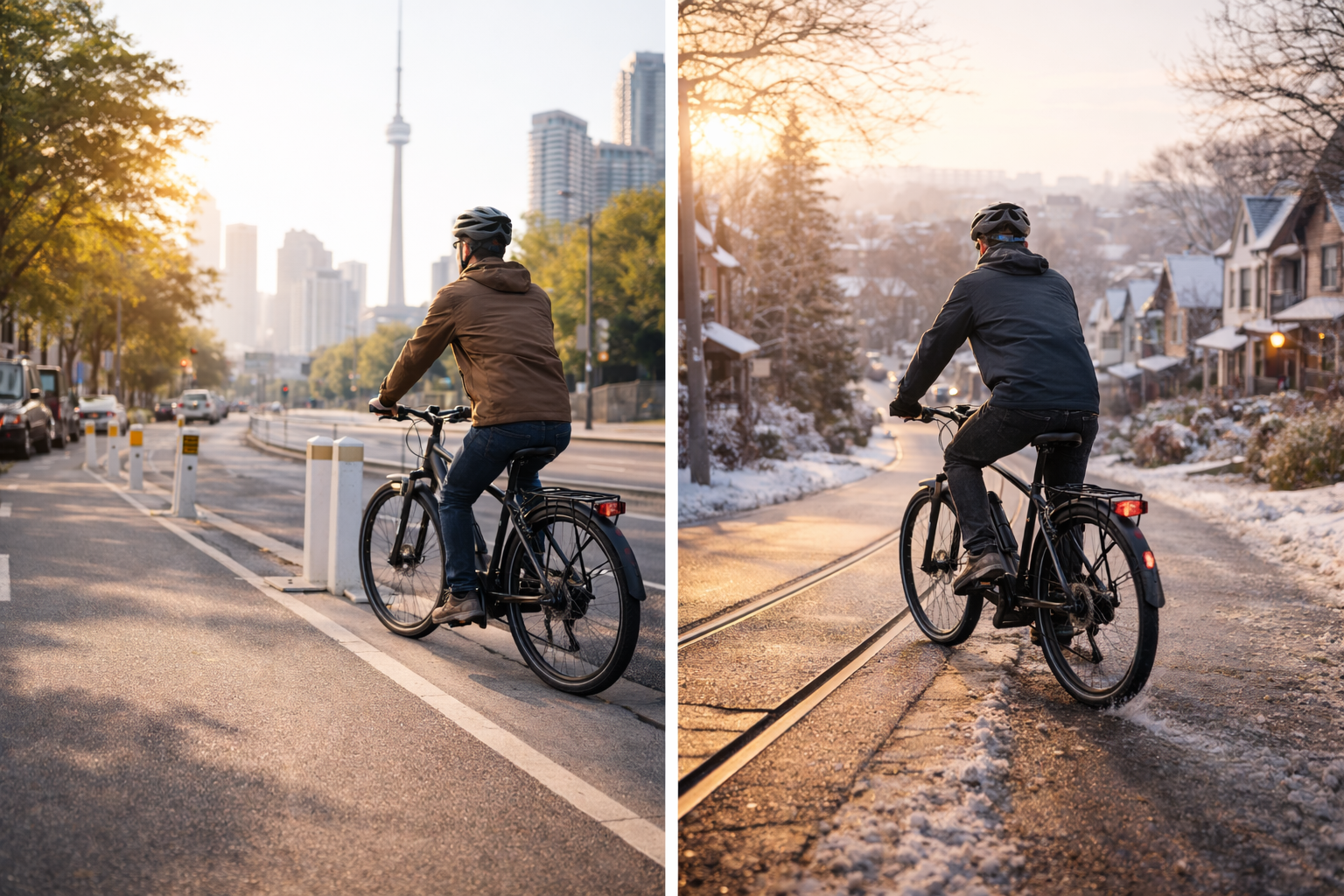
Hybrid e-bikes feature an upright, relaxed riding position that reduces strain on your back, neck, and wrists. This position provides excellent visibility in traffic and feels natural to most riders, making it ideal for commuting and recreational riding. You sit more "on" the bike rather than leaning forward, which many riders find more comfortable for daily use and allows for easy conversation with riding companions.
Mountain e-bikes offer a more forward-leaning position than hybrids but more upright than road bikes. This athletic stance provides better control on technical terrain, allowing you to shift your weight quickly to navigate obstacles. The position is aggressive enough for trail riding but comfortable enough for multi-hour adventures. However, this position may feel less natural for casual riders and provides less visibility in urban traffic situations.
Road e-bikes position you in an aggressive, aerodynamic forward lean with your hands on drop handlebars. This position minimizes wind resistance and maximizes power transfer for high-speed riding. While efficient, this position puts more pressure on your hands, wrists, and lower back. It requires flexibility and core strength to maintain comfortably over long distances, and some riders never fully adapt to the sensation.
Terrain Capability
Understanding where you'll ride most frequently is crucial to selecting the right e-bike.
Hybrid e-bikes excel on paved roads, bike paths, hard-packed gravel trails, and light dirt paths. They handle urban obstacles like potholes, curbs, and streetcar tracks confidently. While they can venture onto easier trails, they lack the suspension and tires needed for technical mountain biking. Their medium-width tires (typically 35-50mm) strike a balance between the grip needed for varied surfaces and the efficiency required for pavement. Think of hybrids as capable of going 80% of places you'd want to ride, making them ideal for riders who split time between city streets and recreational paths.
Mountain e-bikes are specifically engineered for challenging off-road terrain including steep climbs and descents, rock gardens and root sections, loose gravel and mud, technical singletrack trails, and even downhill bike parks. Their wide, knobby tires (2.3-2.8 inches wide) provide exceptional traction in loose conditions. Suspension systems ranging from 100mm to 200mm of travel absorb impacts and maintain control on rough terrain. However, this capability comes with trade-offs—mountain e-bikes feel sluggish and inefficient on pavement due to tire resistance and heavier weight.
Road e-bikes are designed exclusively for smooth pavement. Their narrow tires (23-32mm) and rigid frames provide minimal cushioning, making them uncomfortable and potentially unsafe on rough surfaces. They perform beautifully on well-maintained roads, bike lanes, and smooth paths but are unsuitable for gravel, trails, or poorly maintained urban streets. A single pothole or patch of gravel can be hazardous on a road bike, limiting where you can confidently ride.
Motor Power and Battery Performance
Electric assist systems vary significantly across e-bike categories, affecting how they deliver power and how far they'll take you.
Hybrid e-bikes typically feature mid-drive or hub motors ranging from 250W to 750W. These motors provide smooth, reliable assistance suitable for urban riding and moderate hills. Battery capacities usually range from 400Wh to 625Wh, providing 40-120 kilometers of range depending on assist level, rider weight, and terrain. The motor tuning prioritizes smooth engagement and predictable power delivery rather than maximum torque, making hybrid e-bikes feel natural and easy to control in traffic.
Mountain e-bikes demand powerful motors, typically 500W to 750W mid-drive systems from premium manufacturers like Bosch, Shimano, or Brose. These motors deliver high torque for steep climbs and technical sections, often producing 75-90 Nm of torque. Battery capacities are often larger (500Wh to 750Wh) to handle the increased demands of trail riding, though range is typically shorter (30-80 kilometers) due to challenging terrain and higher power usage. The motor tuning emphasizes immediate power delivery and maintains assistance even at low speeds during technical climbs.
Road e-bikes use lighter, more compact motor systems designed to complement rather than dominate the riding experience. Motors typically range from 250W to 350W, producing less torque (40-60 Nm) than mountain or hybrid systems. Battery capacities are often smaller (300Wh to 500Wh) to reduce weight, but the efficient riding position and low rolling resistance provide impressive range (80-150+ kilometers). The motor assistance is subtle and designed to fade into the background, providing a natural feeling that mimics non-assisted riding.
Weight and Portability
E-bike weight significantly impacts handling, maneuverability, and practicality for storage and transportation.
Hybrid e-bikes typically weigh 20-28 kilograms (45-62 pounds), making them reasonably manageable for most riders. While you wouldn't want to carry one up multiple flights of stairs daily, most people can lift them onto bike racks, maneuver them through doorways, and handle them for basic maintenance. This moderate weight contributes to stable, predictable handling without feeling unwieldy in parking situations or tight spaces.
Mountain e-bikes are the heaviest category, typically weighing 23-30 kilograms (50-66 pounds) due to their robust frames, substantial suspension systems, and larger batteries. This weight provides stability on descents and helps maintain traction on climbs, but it makes them challenging to transport and store. Lifting a mountain e-bike onto a vehicle rack or carrying it over obstacles on the trail requires significant strength. The weight becomes less noticeable while riding thanks to the motor assistance, but it's a real consideration for storage and transportation.
Road e-bikes are the lightest category, ranging from 12-18 kilograms (26-40 pounds). Manufacturers use lightweight carbon fiber or aluminum alloys and minimize unnecessary features to keep weight down. This reduced weight improves climbing efficiency, acceleration, and handling, making road e-bikes feel nimble and responsive. The lighter weight also makes them easier to store, transport, and handle when the battery dies mid-ride.
Component Specifications
The components on each type of e-bike reflect their intended use and design priorities.
Hybrid e-bikes feature durable, low-maintenance components suitable for daily use in various conditions. Drivetrains typically offer 7-11 speeds with wide-range gearing for both climbing and flat riding. Hydraulic disc brakes provide reliable all-weather stopping power. Tires are often puncture-resistant for urban riding. Many hybrids include integrated features like fenders, racks, lights, and kickstands—practical additions often omitted from performance-oriented bikes. The component selection prioritizes reliability and practicality over weight savings or maximum performance.
Mountain e-bikes use rugged, high-performance components engineered to withstand trail abuse. Suspension systems from brands like RockShox, Fox, or Marzocchi are specifically tuned for e-bike weight and power. Drivetrains often feature wide-range 10-12 speed systems with low gears for steep climbs. Powerful 4-piston hydraulic disc brakes with 180-220mm rotors provide massive stopping power. Dropper seatposts allow quick saddle height adjustment for technical descents. Tires emphasize grip over efficiency, and all components are chosen for durability even when that means additional weight.
Road e-bikes feature lightweight, performance-oriented components similar to traditional road bikes. Drivetrains offer 10-12 speeds with closer gear ratios optimized for pavement speeds. Dual-piston hydraulic or mechanical disc brakes provide adequate stopping power with minimal weight. Drop handlebars offer multiple hand positions for long rides. Components emphasize weight savings and aerodynamics, with integrated cables, streamlined frames, and minimal accessories. Everything is designed to maximize speed and efficiency on paved surfaces.
Price Considerations
Understanding the typical price ranges helps set realistic expectations for your budget.
Hybrid e-bikes offer the most accessible entry point, with quality models available from $2,000 to $5,000. Budget-friendly options around $2,000-$3,000 provide reliable transportation with basic components. Mid-range models ($3,000-$4,000) offer better motors, larger batteries, and higher-quality components. Premium hybrids ($4,000-$5,000+) feature top-tier components, advanced motor systems, and refined designs. The broad price range means there's likely a hybrid e-bike for most budgets.
Mountain e-bikes command premium prices due to their sophisticated suspension systems and durable components. Entry-level models start around $3,500-$4,500, offering hardtail (front suspension only) designs or basic full-suspension systems. Mid-range eMTBs ($4,500-$7,000) provide capable full-suspension systems and reliable components suitable for most riders. High-end models ($7,000-$12,000+) feature advanced suspension designs, carbon frames, and top-tier components for serious trail enthusiasts.
Road e-bikes span a wide price range depending on materials and components. Aluminum-framed models start around $3,000-$4,500, offering solid performance for recreational riders. Mid-range options ($4,500-$7,000) often feature carbon frames and higher-quality drivetrains. Premium road e-bikes ($7,000-$15,000+) use aerospace-grade carbon, electronic shifting, and the most advanced motor integration for serious cyclists who prioritize performance and weight savings.
Which E-Bike Type Is Right for You?
Choose a Hybrid E-Bike If You:
Hybrid e-bikes are ideal for riders whose needs span multiple categories. Consider a hybrid e-bike if you want one bike that does everything reasonably well, prioritize comfort and upright visibility for commuting, ride primarily on pavement but want the capability for occasional gravel or light trails, need to carry cargo like groceries, work supplies, or gear, want lower maintenance and more durable components, appreciate integrated features like fenders, lights, and racks, or are new to cycling and want a forgiving, easy-to-handle bike.
Hybrid e-bikes excel as do-everything machines for riders who want versatility without specialization. They're perfect for commuters who occasionally want to explore parks and trails, families who want one bike for varied recreational riding, and anyone seeking a practical transportation solution that adapts to changing needs. If you're unsure which type suits you best, a hybrid is often the safest choice—it won't be the absolute best at any single task, but it will be competent at nearly everything you'll want to do.
Choose a Mountain E-Bike If You:
Mountain e-bikes serve riders who prioritize off-road adventures and technical terrain. Consider an eMTB if you regularly ride on trails, singletrack, and off-road terrain, enjoy exploring backcountry and remote areas, want to tackle steep climbs and technical descents, prioritize capability and traction over speed and efficiency, already enjoy mountain biking and want electric assistance for longer rides or more challenging terrain, or have access to mountain bike trail systems and want to maximize your enjoyment of them.
Mountain e-bikes open up terrain that might be inaccessible on traditional bikes, allowing you to climb higher, ride longer, and tackle more technical challenges. They're ideal for weekend trail warriors, riders who live near mountain bike destinations, and anyone who finds joy in the challenge and excitement of off-road riding. However, they're poor choices for primary transportation or road riding due to their weight, rolling resistance, and inefficiency on pavement.
Choose a Road E-Bike If You:
Road e-bikes suit cyclists focused on speed, distance, and performance on paved surfaces. Consider a road e-bike if you primarily ride on smooth, well-maintained roads and bike paths, want to travel longer distances quickly and efficiently, enjoy group rides or cycling clubs focused on road riding, appreciate the aerodynamic position and efficiency of traditional road bikes, want the lightest possible e-bike, or have a background in road cycling and want electric assistance for challenging routes or headwinds.
Road e-bikes excel at specific tasks: fast commuting on good infrastructure, fitness-oriented long-distance rides, and keeping pace with faster riders or group rides. They're ideal for experienced cyclists who understand and accept the limitations of road bikes but want electric assistance to extend their range or maintain speed with less effort. However, they're impractical for mixed-surface riding, uncomfortable on rough roads, and lack the versatility that many casual riders appreciate.
Making Your Final Decision
Choosing between hybrid, mountain, and road e-bikes ultimately comes down to honest self-assessment about how and where you'll actually ride. Consider these questions:
What surfaces will you ride on most frequently—80% pavement, 80% trails, or a true mix? Do you want one versatile bike or are you willing to have specialized bikes for different purposes? What's your primary goal: transportation, recreation, fitness, or adventure? How important is comfort versus performance? What's your experience level with cycling? Will you need to transport or store the bike in challenging spaces?
For most riders, especially those new to e-bikes or cycling in general, hybrid e-bikes offer the best combination of versatility, comfort, and practicality. They won't disappoint you when you venture onto a gravel path or encounter rough pavement, and they provide a comfortable, confidence-inspiring platform for developing your cycling skills.
Enthusiasts with specific riding focuses should choose mountain or road e-bikes that align with their passion. If you know you'll spend most of your time on trails, a mountain e-bike's capabilities justify its limitations elsewhere. If you're committed to road cycling and have good infrastructure, a road e-bike's performance advantages become meaningful.
Test Ride Before You Buy
No amount of reading can replace the experience of actually riding different e-bike types. Visit local bike shops to test ride models from each category. Pay attention to how the bike feels, how the motor engages, whether the riding position suits your body and flexibility, and whether you can imagine using this bike regularly for your intended purposes.
Many riders are surprised by which type feels best once they actually ride them. You might expect to prefer a sporty road bike but find the upright comfort of a hybrid more appealing. Or you might think you want a hybrid but discover that a mountain bike's capability opens up riding possibilities you hadn't considered.
The Versatile Champion: Hybrid E-Bikes
For the vast majority of e-bike shoppers, hybrid e-bikes represent the optimal choice. They offer enough performance for efficient commuting, enough comfort for all-day recreational rides, enough capability for varied terrain, and enough practicality for real-world use. Unless you have specific, focused riding goals that demand specialized equipment, a quality hybrid e-bike will serve you well for years to come.
Ready to explore your options? Browse our comprehensive collection of hybrid e-bikes to find the perfect model for your riding style and needs. With expert guidance and a range of options from entry-level to premium, you'll find an e-bike that transforms how you travel and explore.
Recent articles
View all
Making the Switch: How Road Cyclists Can Master Gravel Riding
The Ultimate Guide to Gravel Bikes: Everything You Need to Know Before Buying