

Best Indoor Cycling Apps for Smart Trainers: Zwift, TrainerRoad, and More
Best Indoor Cycling Apps for Smart Trainers: Zwift, TrainerRoad, and More
Indoor training has changed fast in the last few years. A smart trainer can now control resistance automatically, simulate climbs, and run structured workouts with precise power targets. But the experience depends heavily on the software you choose. The best indoor cycling apps don’t just “connect and record”—they shape your motivation, your training plan, and how effectively you use features like erg mode training.
This guide breaks down the most popular indoor training apps for smart trainers—Zwift, TrainerRoad, and several strong alternatives—so you can pick the right platform for your goals, budget, and riding style. The focus is informational: what each app does well, who it’s best for, what you’ll need to run it smoothly, and practical tips for getting started.
How indoor cycling apps work with smart trainers
Most smart trainer apps connect to your trainer using Bluetooth or ANT+. Once paired, the app can read power, speed, and cadence (depending on your setup), and in many cases control resistance. Two key control modes come up across bike trainer apps:
- ERG mode: The app sets a target power (say 220 watts). Your trainer adjusts resistance to keep you near that target as you change cadence and gearing. This is ideal for intervals and steady endurance work because it reduces “gaming” the workout.
- Simulation mode (SIM): Resistance changes based on virtual grade, wind, rolling resistance, and your speed. This is common in virtual cycling worlds like Zwift and in video-route apps like Rouvy.
Most indoor cycling apps also integrate with heart rate monitors, some integrate with smart fans or steering devices, and many sync completed rides to training logs (e.g., Strava, TrainingPeaks). Your best experience depends on stable connectivity, correct sensor pairing, and a setup that fits your room and device.
Quick checklist: what to consider before choosing an app
- Your main goal: Fitness and fun, race-style intensity, structured training plans, rehab/base miles, or “ride real roads” immersion.
- How you stay motivated: Social group rides, gamification and badges, coaching and analytics, or simple no-frills workouts.
- Hardware compatibility: Direct-drive vs wheel-on, Bluetooth vs ANT+, and whether your trainer supports controllable resistance and power reporting.
- Training features: Interval library, adaptive plans, workout creator, progression tracking, and how well erg mode training is implemented.
- Cost and subscriptions: Most platforms are monthly subscriptions; some offer free tiers with limited features.
- Device support: Windows/Mac, iOS/Android, Apple TV, and whether you want to run it on a dedicated tablet.
If you’re still shopping for hardware, it helps to browse a range of Indoor Trainers or narrow down to a Smart Trainer that matches your budget and space.
Zwift: best for virtual cycling, racing, and community
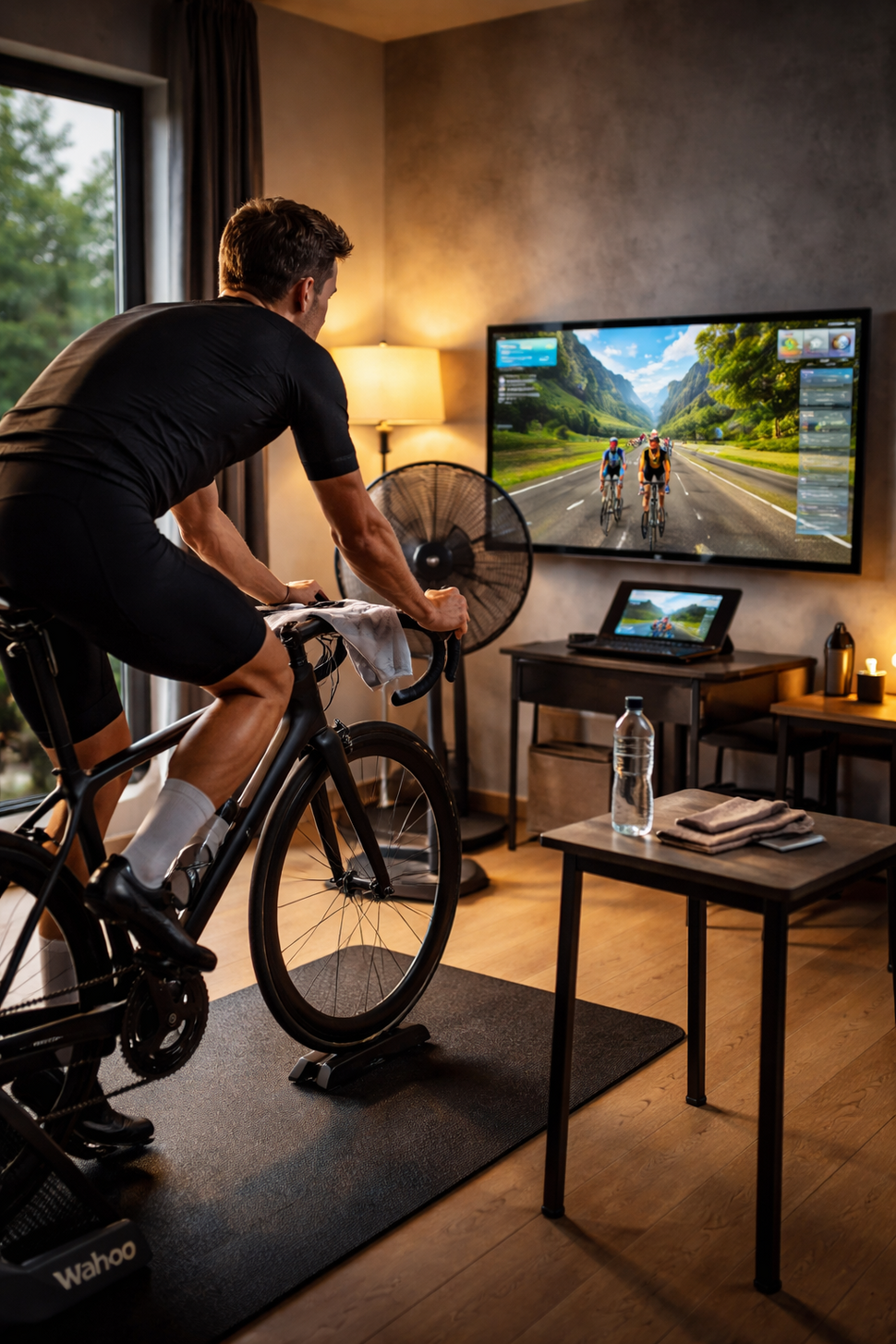
Zwift is the name most people associate with virtual cycling. It combines an online world (Watopia plus rotating real-world inspired maps), structured workouts, group rides, and a deep racing scene. If you like the idea of logging on and instantly having people to ride with, Zwift is hard to beat among indoor cycling apps.
What Zwift does best
- Motivation through social riding: Group rides, pace partners, events, and always-on rider population help time pass quickly.
- Racing and fast group workouts: If competition gets you training, Zwift’s races and workout events are a powerful driver.
- Immersion and variety: Routes, climbs, and frequent events keep indoor training apps from feeling repetitive.
- Solid trainer control: SIM mode for terrain and ERG mode for workouts; most modern trainers pair easily.
Where Zwift may not be ideal
- Training plan depth: Zwift has plans and workouts, but it’s not as coaching-focused as TrainerRoad for long-term progression and detailed analytics.
- Distraction risk: If you want laser-focused interval execution, the social world can tempt you into “just one more sprint.”
- Subscription cost: For riders who only want structured intervals, Zwift can feel expensive relative to simpler indoor training apps.
Who Zwift is best for
Riders who want fun first, people who miss the group ride in winter, anyone interested in virtual racing, and cyclists who respond to gamification. If motivation is your biggest barrier to consistent indoor training, Zwift is frequently the best cycling app to solve that problem.
TrainerRoad: best for structured training and measurable progress
TrainerRoad is built around purpose-driven workouts, plans, and progression tracking rather than a virtual world. It’s one of the most respected smart trainer apps for athletes who want to improve FTP, endurance, and race performance with minimal fuss. The interface is clean, workouts are clear, and the platform’s “training-first” philosophy shows everywhere.
What TrainerRoad does best
- Structured plans and progression: Plans are organized by discipline (road, gravel, MTB, triathlon) and time availability.
- Workout library and creator: Huge set of interval sessions plus tools to customize workouts.
- Excellent erg mode training experience: TrainerRoad is designed for ERG-based intervals; it’s straightforward to execute hard sessions precisely.
- Analytics and performance tracking: Clear post-ride analysis and long-term tracking that’s easy to interpret.
- Low distraction: Ideal if you want to “get it done” efficiently, especially on weekdays.
Where TrainerRoad may not be ideal
- Less immersive: No 3D world. Many riders pair it with music, podcasts, or videos.
- Social features are limited: If you rely on group energy, it may feel solitary compared to Zwift.
Who TrainerRoad is best for
Cyclists who love structure, want a clear path to improvement, and prefer efficient sessions. It’s especially strong for riders training for a spring event through winter base and build phases. If you like the idea of being coached by the plan—and you’re comfortable with focused intervals—TrainerRoad is often the best choice among indoor training apps.
Wahoo SYSTM: best for cross-training and guided sessions
Wahoo SYSTM (formerly The Sufferfest) blends cycling workouts with yoga, strength, mental training, and a large library of guided videos. It’s a different style than Zwift’s open world or TrainerRoad’s minimalism. Many riders like SYSTM because it feels like a complete training suite rather than only bike trainer apps.
Standout strengths
- Video-based workouts: If following on-screen coaching and entertainment helps you push harder, SYSTM excels.
- Cross-training built in: Strength and mobility are easy to add without extra subscriptions.
- Varied session types: A good option when you’re bored of pure ERG intervals.
Best for
Riders who want guided indoor sessions, a more holistic plan, and an all-in-one platform. It can be a strong winter choice when you want to build durability, not just watts.
Rouvy: best for real-road video routes with smart resistance
Rouvy focuses on riding real roads via video routes, with your smart trainer changing resistance as the gradient changes. For riders who don’t love animated worlds but want immersion, Rouvy is one of the best indoor cycling apps.
Why people choose Rouvy
- Realistic riding feel: Climbing and descending on filmed routes can feel more like outdoor riding than a game world.
- Route variety: Plenty of famous climbs and scenic rides.
- Training support: Workouts and plans exist, though the platform is primarily route-driven.
Best for
Riders motivated by scenery, those training for a specific climb or event, and anyone who wants virtual cycling without the “game” aesthetic.
MyWhoosh: best budget-friendly option with surprising depth
MyWhoosh has grown quickly as a feature-rich platform that includes virtual worlds, workouts, and training plans—often at a lower cost than long-established competitors. Compatibility and polish can vary by device, but it’s worth considering if you want a modern virtual riding experience without paying premium subscription fees.
Best for
Riders who want a Zwift-like experience and structured workouts but are cost-sensitive, or who want a second platform for variety.
Garmin Tacx Training: best for Tacx users and video-focused training
Garmin Tacx Training is a natural fit if you’re in the Garmin ecosystem or using Tacx hardware. It offers training videos, structured workouts, and route-based sessions with smart resistance control. It’s less about mass social riding and more about personal training with good visual content.
Best for
Riders who value training videos and already rely on Garmin tools for tracking and planning.
IndieVelo and other race-focused platforms
Some newer platforms focus primarily on racing and competitive structure. If you’re interested in tactical racing, ranking systems, and a competitive environment without as much “open world” wandering, race-forward apps can be compelling. The tradeoff is usually fewer casual rides and less training-plan depth compared to TrainerRoad, or less broad community compared to Zwift.
Which app is best? Match the platform to your riding style
Rather than crowning one winner, it’s more useful to match the indoor cycling app to your personality and training goals.
- If you want the most fun and motivation: Zwift is the default recommendation, especially if you’ll use events and group rides.
- If you want the most effective structured training: TrainerRoad is a top pick for progression, clarity, and repeatable execution.
- If you want guided workouts plus strength and mobility: Wahoo SYSTM is a strong all-in-one.
- If you want real-road immersion: Rouvy (or Tacx Training if you’re Garmin/Tacx-focused) is often the best fit.
- If you want low-cost experimentation: MyWhoosh is worth testing for features per dollar.
Getting the most out of ERG mode training
ERG mode can be a game-changer, but it’s also where many riders get frustrated. Here are practical, experience-based tips that apply across most smart trainer apps:
- Pick a steady cadence and stick to it: ERG works best when you don’t surge cadence up and down. Many riders settle around 85–95 rpm for most intervals.
- Shift before the interval starts: In ERG, gearing matters less, but it affects flywheel speed and “feel.” Choose a gear that feels smooth and consistent, then leave it.
- Don’t stop pedaling in hard intervals: If cadence drops too low, ERG can “spiral” into heavy resistance. If you feel cadence slipping, focus on keeping the legs turning rather than mashing.
- Use calibration/spindown when appropriate: Many trainers benefit from periodic calibration. Follow your trainer manufacturer’s guidance.
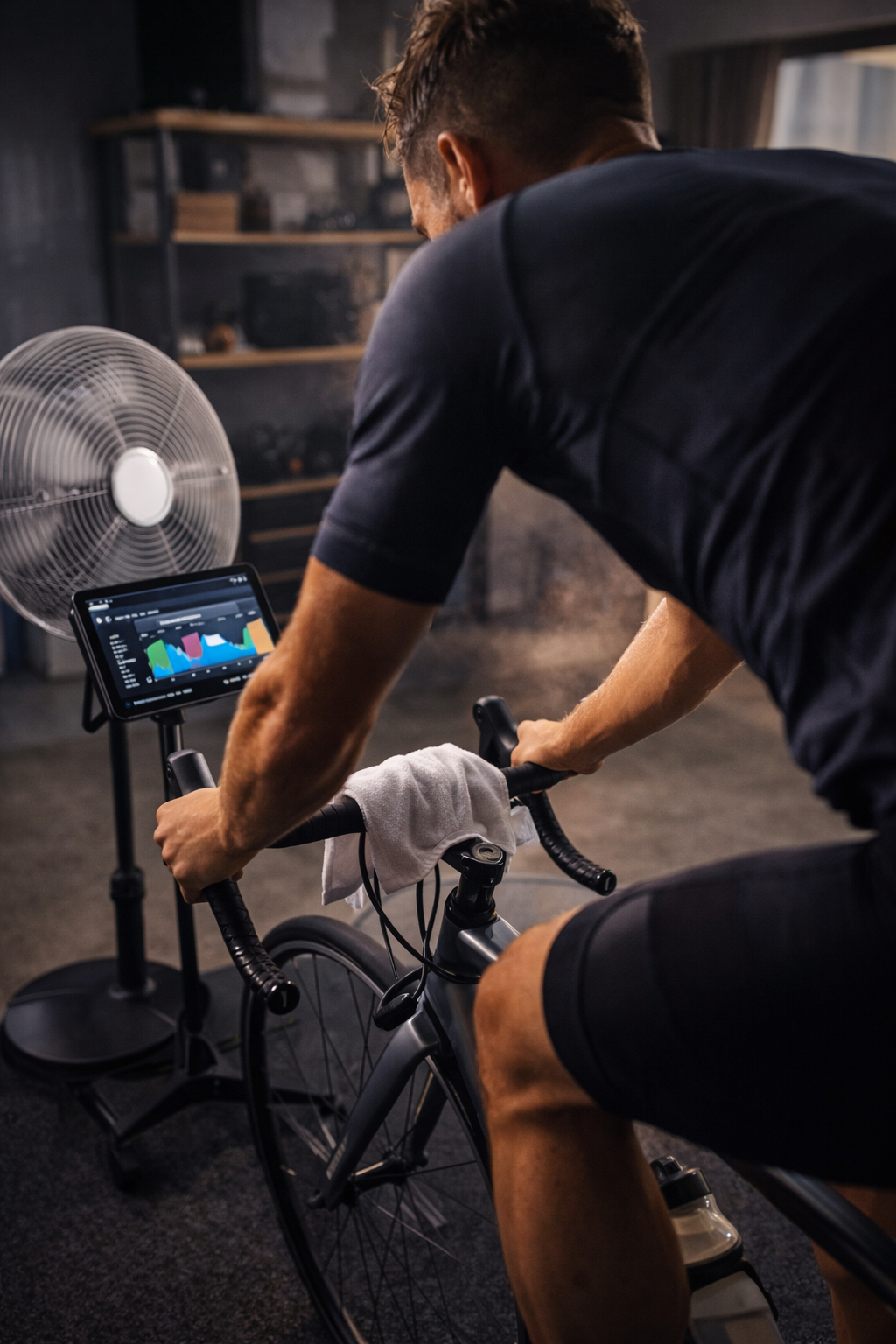
- Plan cooling like it’s part of training: Poor cooling raises heart rate and perceived exertion quickly indoors. A strong fan is often more important than another app subscription.
Common setup issues (and how to avoid them)
Dropouts and unstable connections
- Prefer ANT+ with a USB dongle on a laptop when possible, especially in busy Bluetooth environments.
- Keep the receiving device close to the trainer (a short USB extension cable can help if using ANT+).
- Limit competing connections (don’t pair the trainer to multiple devices at once unless you know how the app handles it).
Power mismatches between devices
- Choose one “source of truth” for power: Either the trainer’s power or a crank/pedal power meter.
- If you use a power meter, consider pairing power from the meter and controllable resistance from the trainer (many apps support this).
ERG feels too hard or too easy
- Check your FTP setting: Many workouts are scaled to FTP. An outdated FTP makes the entire plan feel wrong.
- Use workout intensity adjustment carefully: A 2–5% tweak is normal; big changes may indicate FTP needs updating.
Do you need more than one app?
Many experienced riders do use two indoor training apps—most commonly Zwift for social rides and TrainerRoad (or another structured platform) for interval days. This can work well if your budget allows it and you’re clear on purpose:
- Structured days: TrainerRoad (or SYSTM) for focused execution.
- Motivation days: Zwift events or group rides to keep consistency high.
- Specific prep: Rouvy for practicing long climbs or pacing on real routes.
If you prefer simplicity, choose one platform you genuinely enjoy and can stick with. Consistency beats the “perfect” app used sporadically.
Choosing a smart trainer to match your app
Most current smart trainers work with the major bike trainer apps, but the quality of the experience can vary with stability, noise, maximum resistance, and how smoothly the trainer responds in ERG and simulation modes. If you’re upgrading or buying for the first time, it helps to focus on controllable resistance accuracy, reliable connectivity, and the ride feel that keeps you coming back.
To explore options, you can look through Smart Trainer models, or check out a specific example like the Elite Avanti Smart Trainer.
Extra reading: indoor training ideas for the off-season
If you’re building your winter routine, pairing the right app with a sensible weekly structure matters as much as the platform choice. Two useful guides are Tips For Off Season Indoor Bike Trainer Workouts and Winter Training for Cyclists: How to Stay in Shape During the Off-Season.
Bottom line
The best indoor cycling apps for smart trainers depend on what keeps you consistent. Zwift is the standout for virtual cycling, community, and racing. TrainerRoad is a leader for structured plans and efficient erg mode training. Wahoo SYSTM suits riders who want guided sessions plus strength and mobility. Rouvy shines for real-road video routes. MyWhoosh and other emerging platforms can offer impressive value and variety.
If you’re unsure, take advantage of free trials where available and judge by one simple standard: which app makes you want to get on the trainer tomorrow.
Recent articles
View all
How to Set Up Your Indoor Bike Trainer: Complete Step-by-Step Guide

Making the Switch: How Road Cyclists Can Master Gravel Riding